


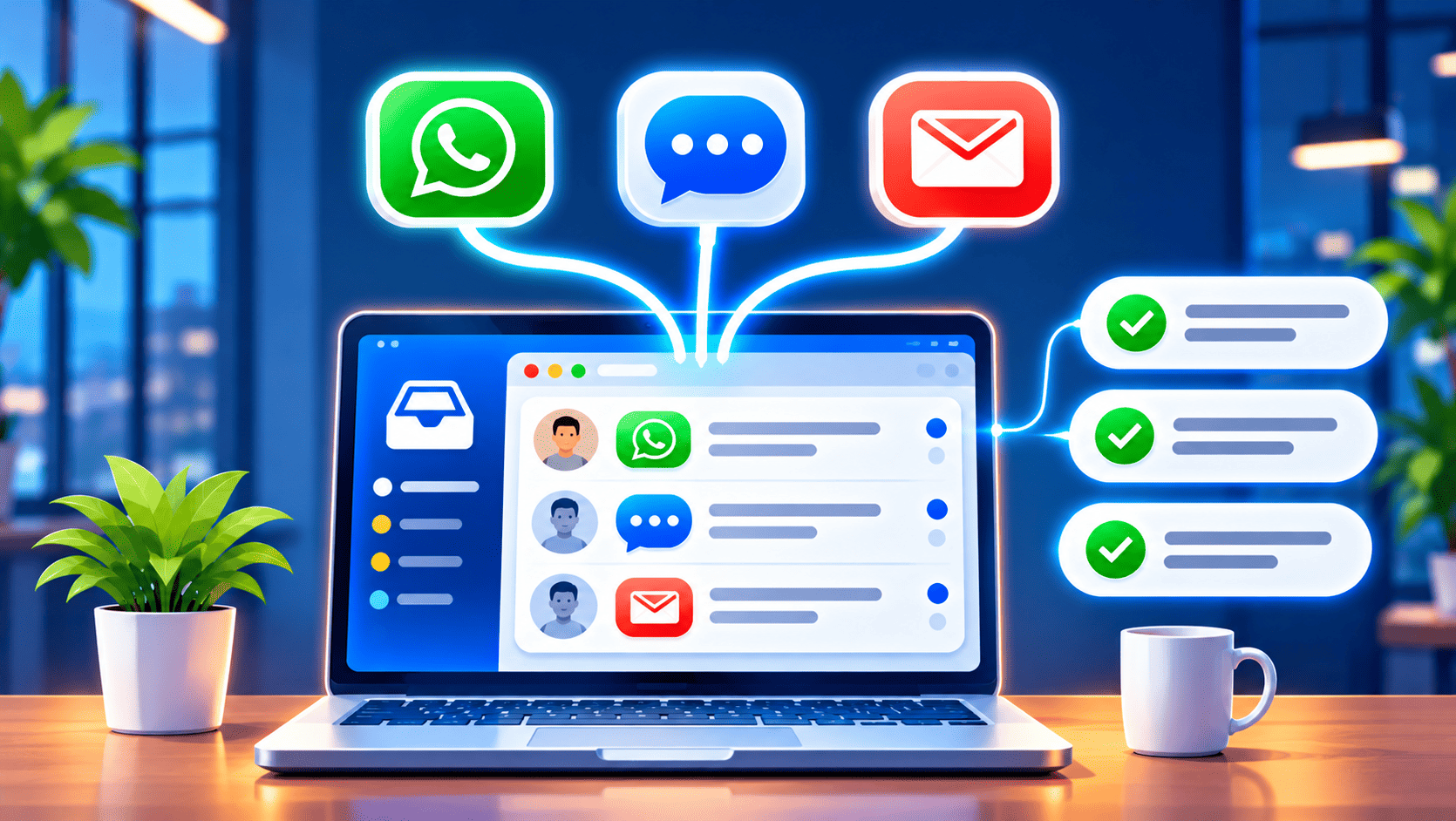
Count the apps your sales team opens in a single morning. WhatsApp on two phones. Instagram DMs on the marketing intern's account. The Facebook Page inbox. Gmail for quotations. An SMS panel for reminders. Maybe Telegram for one big client. Each app holds a piece of the customer's story, and nobody sees the whole thing. An omnichannel inbox pulls those conversations into one place, linked to one customer record, so your team can reply faster and never lose context when a customer switches from Instagram to WhatsApp to email. This guide explains what that looks like for an Indian SMB and how to roll it out without overwhelming your team.
Table of contents
- The cost of juggling apps
- What an omnichannel inbox actually does
- Multichannel vs omnichannel: the key difference
- Channel-by-channel: what to expect
- What to measure once channels are connected
- Rolling it out in your team
- A hypothetical example
- How Wetroo helps
- FAQs
- Conclusion
The cost of juggling apps
Switching between apps feels harmless, but it quietly costs you:
- Slow replies. Instagram DMs get checked twice a day; WhatsApp gets checked constantly. Leads on the "quiet" channel cool off.
- Lost context. A customer asks a question on Instagram, then follows up on WhatsApp. The person on WhatsApp has no idea what was promised.
- Duplicate records. The same person exists three times, once per channel.
- No single report. You cannot see total enquiries or response times across channels.
- Login sprawl. Shared passwords for Instagram and Facebook accounts are a security risk, especially when staff leave.
For businesses running ads across Meta platforms and Google, this fragmentation gets worse with every new campaign.
What an omnichannel inbox actually does
At its simplest, an omnichannel inbox:
- Collects messages from all connected channels into one list.
- Matches them to a contact, so a WhatsApp chat and an email from the same person sit on one timeline.
- Routes conversations to the right team member with assignment rules.
- Lets you reply from the same screen, using the right format for each channel.
- Reports on volume, response times and outcomes across channels.
For a short definition, see our explainer on the omnichannel inbox.
Multichannel vs omnichannel: the key difference
| Multichannel | Omnichannel inbox |
|---|---|
| Channels available | Several |
| Where conversations live | In separate apps |
| Customer view | Separate per channel |
| Handoffs between channels | Manual and often lost |
| Reporting | Per app, if at all |
| Team assignment | Different in each app |
Being on many channels is multichannel. Connecting them around the customer is omnichannel.
Channel-by-channel: what to expect
Usually the busiest channel for Indian SMBs. On the official WhatsApp Business Platform, you can reply freely within 24 hours of the customer's last message, and use approved templates outside that window, as Meta's documentation describes.
Instagram and Facebook
DMs, comments and lead ad enquiries often come from younger, browse-first buyers. Bringing them into the inbox stops them waiting until someone checks the app.
SMS
Useful for reminders, OTP-adjacent alerts and customers without smartphones. In India, commercial SMS is regulated by TRAI's commercial communication rules, which require senders to register on telecom operators' DLT platforms with approved headers and content templates, as set out in TRAI's TCCCPR regulations. Check current requirements with your SMS provider.
Still essential for quotations, proposals, invoices and B2B buyers who forward documents internally. Linking email to the same contact means the salesperson on WhatsApp knows a quotation has been sent.
Telegram and others
Some businesses, especially in education and communities, use Telegram. If your customers are there, connect it too.
What to measure once channels are connected
The biggest benefit of an omnichannel inbox is that you can finally compare channels fairly. Review these numbers every week:
- Enquiries by channel. Where do customers actually start conversations? Many owners are surprised by how much comes from Instagram DMs or website email.
- First-response time by channel. If WhatsApp averages a few minutes but Instagram takes hours, you have found a leak.
- Conversion by channel. A channel with fewer enquiries but more bookings deserves more attention, and possibly more ad budget.
- Channel switching. How often do customers start on one channel and finish on another? If it happens a lot, unified timelines are paying for themselves.
- Unanswered conversations at day end. This should trend towards zero.
Choosing what to connect first
Connect channels in order of revenue impact, not convenience. For most Indian SMBs that means WhatsApp first, then the channel your ads drive traffic to (often Instagram or Facebook), then email for quotations. Add SMS when you need reminders for customers who do not use WhatsApp actively, and Telegram only if your customers genuinely use it.
Rolling it out in your team
Step-by-step rollout checklist
- List every channel where customers contact you today, including personal accounts staff use
- Rank channels by volume and value; connect the top two first
- Define who handles which channel, or route all channels by product or region
- Merge duplicate contacts during import
- Agree response-time targets for each channel
- Create quick replies and templates per channel
- Train the team in one session, focusing on assignment and notes
- Review combined reports after two weeks and adjust routing
Common mistakes
- Connecting every channel on day one and drowning the team
- Leaving one channel "owned" by a single person who is never online
- Copying WhatsApp-style casual replies into formal B2B email threads
A hypothetical example
Illustrative scenario, not a real business.
A skincare clinic in Bengaluru gets enquiries from Instagram ads, WhatsApp, its Facebook Page and website email. A receptionist handles WhatsApp, a marketing executive checks Instagram, and the doctor's assistant reads email when she has time.
After moving to an omnichannel inbox, all conversations land in one list, tagged by channel and treatment interest. A patient who DMs on Instagram about laser treatment and then messages on WhatsApp appears as one contact, with both conversations visible. The receptionist books the consultation, and an SMS reminder goes out the day before. The clinic manager reviews one weekly report showing enquiries and bookings by channel, which helps her decide where to spend next month's ad budget.
How Wetroo helps
Wetroo's omnichannel inbox unifies Facebook, Instagram, Telegram and WhatsApp conversations in one shared workspace, with WhatsApp running on the official Business API. Within the same CRM, Wetroo also supports SMS, email (including email automation with connected mailboxes), IVR and SIM-based calling, so your team can follow up on the channel that suits each customer.
Leads from Facebook Ads, Instagram, Google Ads lead forms, IndiaMART and WordPress forms sync automatically and can be assigned with custom rules across teams and sub-teams. Each contact has a client timeline with notes and reminders, and the analytics dashboard shows activity across your team. AI agents can respond 24/7 and hand over to a person when needed.
FAQs
What is an omnichannel inbox?
It is a single workspace where conversations from multiple channels, such as WhatsApp, Instagram, Facebook and email, are collected, linked to one customer and handled by a team.
Is an omnichannel inbox only for big companies?
No. Small teams benefit quickly because they have fewer people to check many apps.
Can I send SMS from an omnichannel inbox in India?
Many platforms support SMS, but commercial SMS in India must follow TRAI's DLT registration rules. Your provider should guide you through it.
Do I need separate staff for each channel?
Usually not. Route by product, region or language instead, and let each person handle all channels for their leads. That keeps one owner per customer.
Will customers know I use an omnichannel inbox?
No. They simply experience faster, better-informed replies on the channel they chose.
Conclusion
Customers do not think in channels. They message wherever is convenient and expect you to remember the last conversation. An omnichannel inbox gives your team that memory: every WhatsApp chat, DM, email and SMS in one place, on one timeline, with clear ownership. Start with your two busiest channels, set simple routing rules and expand from there. To bring your conversations and lead sources together, explore www.wetroo.com.



